
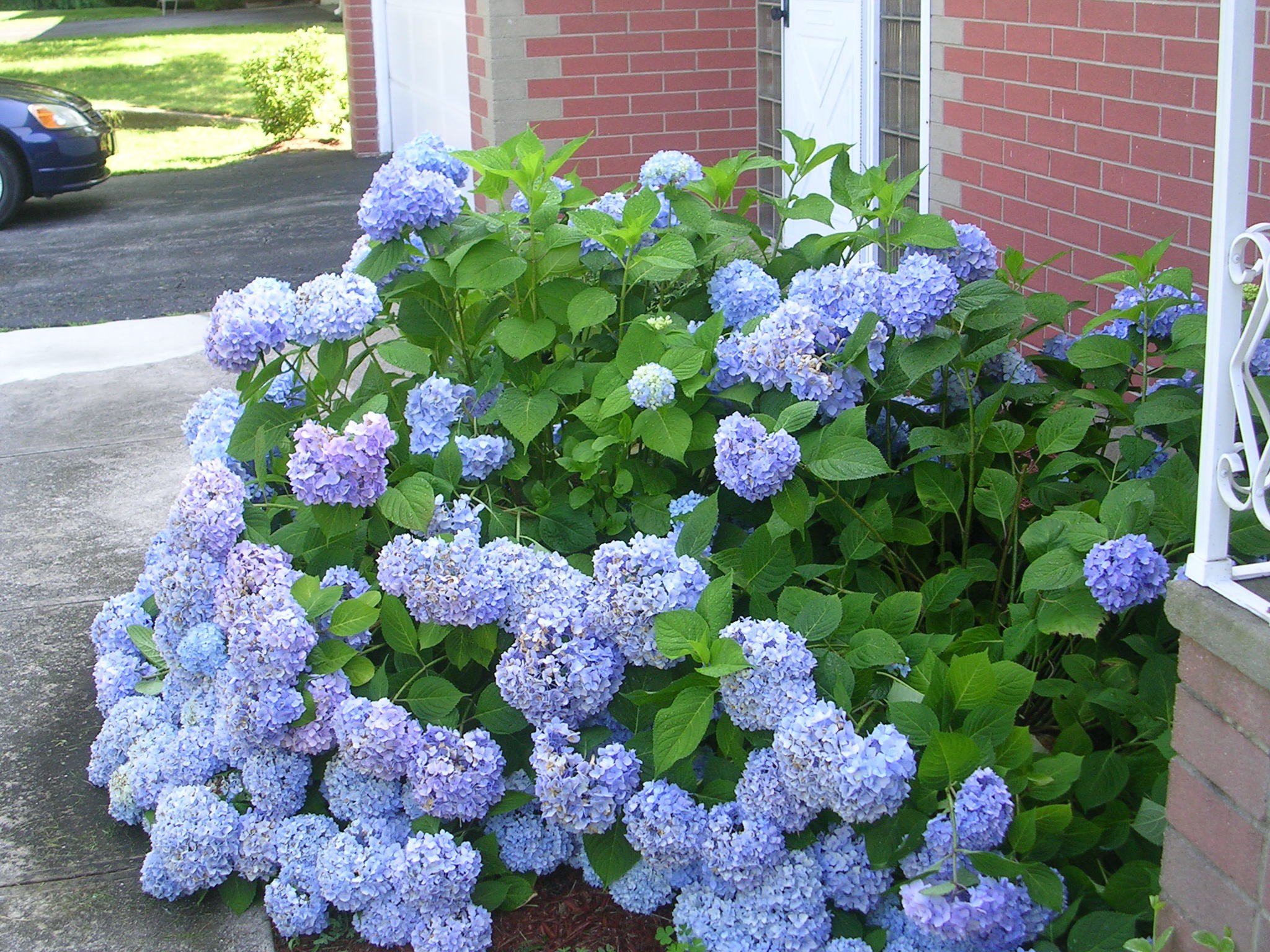
 It’s time to care for hydrangeas so they’ll flower again next spring and summer, and knowing which type of hydrangea you have is key. Knowing which hydrangea you have in your yard or landscape is key. That way, you can prep it for winter.
The common types that grow in New England — Hydrangea paniculata or panicle, Hydrangea arborescens (also known as “smooth”) and Hydrangea macrophylla (also known as “blue” or “bigleaf”) — flower at different times, on different parts of the plant and require different care. If your hydrangea bush has flowers on it right in fall (even if they are snow-covered), it is likely a panicle hydrangea. These types of hydrangea have tall, woody stems with flowers that often begin as white blossoms then turn a bronze or burgundy color in fall. Panicle and smooth hydrangeas both form their flowers off of the plant’s new growth in spring. In order for these to be in good shape to flower next spring, cut them back now or ideally anytime before they start to flower next season.
The other type, H. macrophylla or blue hydrangea, requires different care before the winter. Hydrangea macrophylla form their flowers off the stems that are already on the plant. And if you’re in a colder area, or if winter is particularly severe, the stems will die back to the ground without protection. When H. macrophylla stems die back, it essentially sets the plant back to the starting line. It would need to grow all new shoots in spring, then, come September or October, the plant would eventually form a flower. If you protect the stems now, that protects the flower buds and blossoms, too. That way, they’ll make it through the winter, then they’ll form buds, blossom and flower in spring and summer. And the remedy is fairly simple: Use wood chips! Arborist wood chips tend to work better, as they are bigger and chunkier and create better airflow, allowing less likelihood of mold and rot. Bury the plant right around the base and crown to about a foot deep with the chips in late fall. If some stems are sticking out, no worries. Those may or may not make it through the winter, but you’re trying to protect the stems closer to the ground. Protecting those stems — and especially the flower buds on those stems — from harsh winds, snow and cold weather means they’ll have a better chance of flowering next spring.
In the spring, as temperatures begin to warm up, don’t be too eager to move the mulch away: One cold night could still zap those flower buds and kill them. When the weather has really warmed up, slowly move the wood chips back from the hydrangea bush. You’ll see that any branches that formed off of the stems will form flowers. Caring for your blue hydrangea with a cozy bed of wood chips over the winter will help ensure that you’ll have beautiful flowers in July, and not just in September and October.