
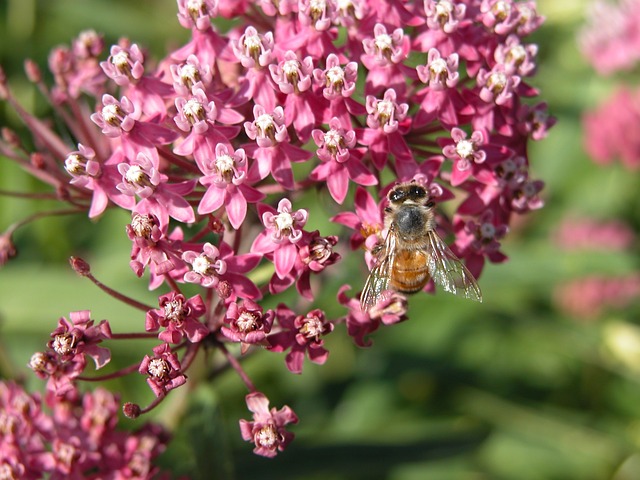
 Many gardeners know that milkweed is a great pollinator plant, especially for monarch butterflies. Monarchs use the flowers as a food source and also a place to lay their eggs. And the monarch larvae consume only milkweed as they grow and undergo metamorphosis, so it is essential! Common milkweed, or Asclepias syriaca, comes with cons as well as pros. Prolific in farm fields and on roadsides throughout the state, it can be aggressive once you introduce it into your garden. So you might want to avoid growing common milkweed in a garden because it can take over in time.
Some good alternatives to the common milkweed can be just as beneficial to pollinator and less of a bully in your garden.
If you have a wetter section in your yard, try swamp milkweed (Asclepias incarnata). This one grows well in wet, and part-shade areas. Purple milkweed (Asclepias purpurascens) thrives in the shade, as well. And a perennial like whorled milkweed (Asclepias verticillata) grows well in dry or sandy soil, is lower-growing and blooms with white flowers. Look for these milkweeds to pleas epollinators yet still look good and behave in your garden.
One common plant you’ll often find is butterfly weed, or Asclepias tuberosa. It is sometimes called a milkweed, though it has no milky, white sap in its stems. The plant grows clusters of bright orange flowers that the butterflies and pollinators also find irresistible. There’s a yellow version too that’s attractive in a perennial flower garden.