
Learn about cherries, including how to plant and grow them.
Listen to Podcast:
How to Grow: Cherries
I remember as a young boy riding in my uncle’s bucket loader as he hoisted me up to pick bushels of cherries from his tree. I still
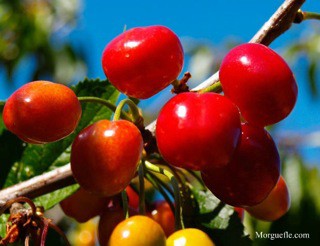 remember the stained smiles of my cousins and me from eating and picking those cherries (Prunus). Cherry varieties are either sweet or sour. While sweet cherries are mostly eaten fresh, and sour or pie cherries used for cooking, don’t let the names fool you. Sour cherries taste great eaten fresh off the tree, too. Sweet cherry trees are taller, less hardy, and more prone to diseases than sour cherries. They thrive in USDA zone 5 and warmer areas in our region. Sour cherries are naturally smaller trees and can survive into USDA zone 4.
Cherry trees also are beautiful landscape plants. Dwarf varieties make perfect flowering trees in spring, in your yard with the added bonus of getting delicious fruit in early summer. Some varieties are self-fruitful, meaning you won’t need to plant another, different variety to get fruit.
When to Plant
Plant bare root cherry trees in early spring as soon as the ground can be worked. You can find a wider selection of trees, less expensively, bare root through the internet than what’s available at local garden centers. However, if you’re planting just 1 to 2 trees, buying a container cherry tree locally and planting in spring is easier.
Where to Plant
Cherry trees need full sun and well-drained fertile soil to grow well. Plant on the top of a slope to avoid late spring frosts. Cherry trees are more susceptible to root rot diseases if grown on heavy clay soil. If clay soil is your only option, plant on raised beds to help with water drainage.
How to Plant
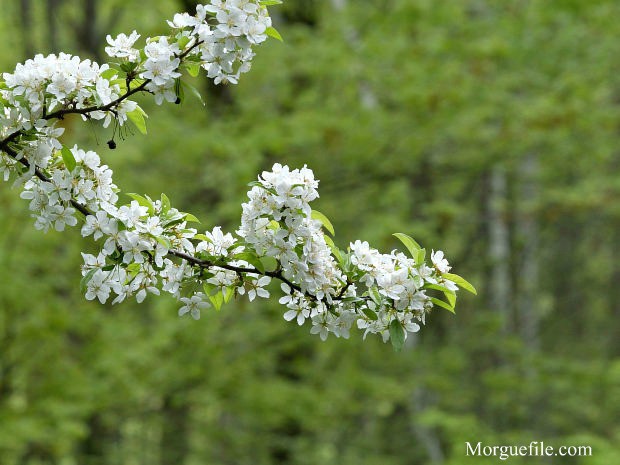 Cherry trees come in standard sized trees (25-40 feet tall), semi-dwarf (15-25 feet tall) and dwarf (8-12 feet tall). Plant trees as far apart as their ultimate height. Dig holes twice as wide as the root ball and deep enough so the graft union (bulge on the bottom of the trunk) is 2 inches above the soil line.
Care and Maintenance
Keep a 4-foot wide area around the trees weed free by mulching with an organic material, such as straw. Keep the straw away from the trunk to avoid rot diseases. In late winter prune sweet cherries to a central leader system and sour cherries to an open center (see our pruning section for more on these techniques). Remove dead, diseased, or broken branches at any time. Once the tree is established and scaffold branches equally distributed around the trunk, pruning consist of removing water sprouts (straight shoots for the main branches) and root suckers (shoots coming out of the ground and around the trunk).
Fertilizer in spring with compost or an organic product to correct any nutrient deficiencies based on a soil test.
Poorly drained soil can lead to a number of soil borne fungal diseases such as fusarium wilt and root rot. Look for disease resistant varieties and keep the soil well-drained. Birds love cherries and you’ll need to place netting or scare devices around when the fruits begin to ripen. Protect the trees in winter with a tree guard wrapped around the trunk to prevent mice and voles from girdling the bark.
Harvest
Cherries start producing fruits about 3 to 5 years after planting. They usually ripen in June in our region. Pick fruits when they easily can be removed from the branch.
Additional Information
Some good sweet cherry varieties to try in our region are ‘Kristin’, a hardy variety from Norway; ‘Black Gold’, a new hardy, self pollinating variety from Cornell University; and ‘Stella’, a Canadian variety with good hardiness and early bearing trees.
Some good sour cherry varieties that are self-pollinating so don’t require another variety are ‘Bali’ are very hardy variety from Canada; ‘Mesabi’ with sweet fruits even for a sour cherry; and ‘Northstar’ that only grows 8-feet tall.
Text excepted from the Northeast Vegetable and Fruit Gardening book.
Podcast Transcript
One of my fondest childhood memories is picking cherries. Every June, my Uncle Billy would hoist a few cousins and me in the front end loader of his tractor and lift us up into the 40 foot high cherry tree on my grandfather’s farm. We’d pick bushels of red cherries and with stained faces and hands we were happy campers.
To grow your own cherry tree, stick with a dwarf or semi dwarf sour cherry for ease of maintenance. ‘Dwarf Northstar’ only grows 8 feet tall making it perfect for small yards. ‘Meteor’ is similar to Northstar, but produces a larger tree and more fruit. ‘Bali’ is great for cold areas, because it’s hardy to minus 40 degrees. It fruits in August and grows to 15 feet. For all of these, you’ll only need one tree for pollination.
Plant in a full sun on well drained soil. Protect young trees from mice, voles, and deer with fencing and trunk guards. Fertilize annually after fruiting with an organic fertilizer. Cherries need less pruning and pest control than other fruits. The biggest problem is birds – cover dwarf trees with netting or use devices such as scare eye balloons.
For this week’s tip, now that the first flush of perennial flowers has past, deadhead the spent blossoms. Deadheading cleans up the plants and prevents them from self sowing. With some perennials – such as dianthus, salvia, and shasta daisy – deadheading stimulates them to bloom again.
From the Vermont Garden Journal on Vermont Public Radio.